White wine
  dry
dry  Germany
  Saxony
 delivery time approx 6-9 workdays
 Rosé wine Semi-dry Germany Saxony
 delivery time approx 6-9 workdays
 White wine dry Germany Saxony
 delivery time approx 6-9 workdays
Viticulture in Saxony is not an ordinary chapter of German wine history. It has grown from tradition, steep slopes, harsh climate, and the passion of many winemakers. Operating within this tension field, the Meissen Winzer Cooperative, briefly WINZER MEISSEN, is one of the region's defining institutions. Their wines stand for artisanal precision, terroir consciousness, and diversity—they embody Saxony's terroir and reflect modern winemaking and quality pursuit. Hereafter, we will jointly explore how the cooperative was formed, what it currently manages and produces, which vineyards shape its character, how it performs in awards, and what makes it particularly special.
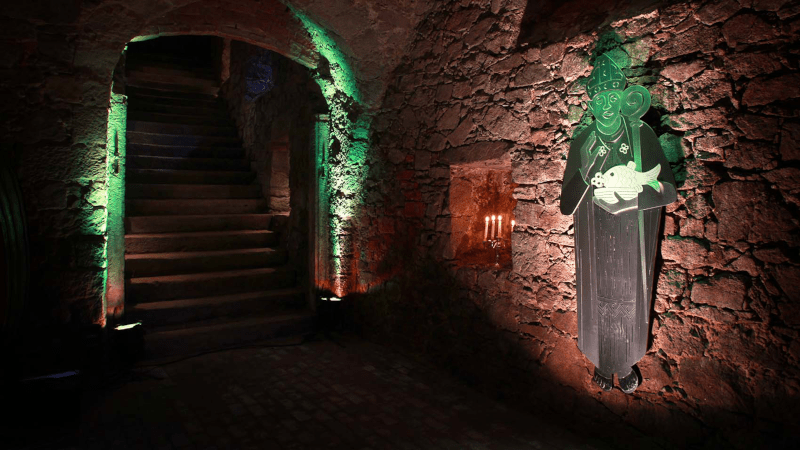
Winzer Meissen
The Meissen Winzer Cooperative is a collective organization of winemakers along the Saxon Wine Road. Their task is to jointly manage vineyards, produce wines, and serve as ambassadors of Saxon wine culture. They offer a broad range: from simple country wines to pure quality wines, to Prädikatswein, sekt, sparkling wines, and spirits. Their members are highly committed both to the cultural landscape and to viticulture itself. The cooperative is led responsibly by individuals combining traditional knowledge with modern vineyard and cellar practices.
History of the Meissen Winzer Cooperative
The founding of the Meissen Winzer Cooperative dates back to 1938. It has steadily developed since then. Today, it unites about 800 members who cultivate approximately 120 hectares of vineyards together. (This number refers to the vineyard areas directly under the cooperative. Saxony overall has about 494 hectares under viticulture, meaning Winzer Meissen accounts for a significant portion of the regional wine production.) Additional milestones include the creation of the WeinErlebnisWelt in Meissen and the consolidation of cooperative structures to integrate viticulture, cellar work, and cultural education under one roof. Over the decades, the cooperative has evolved from a local player into one of the pioneers of Saxon viticulture.
-
Legend / Middle Ages (ca. 1100 / 1161)
According to legend, the first grapevines were planted by Bishop Benno near the Meissen Castle Hill. The first documentary mention of viticulture is from the year 1161. -
1604
The first proof of building terrace walls on the Zscheilberg in Meissen to make the previously untapped steep slopes suitable for quality viticulture. -
1788
A doctor born in Meissen (founder of homeopathy) publishes a historical wine tasting on iron and lead, which allowed the detection of wine adulterated with toxic lead sugar at that time. -
1887
On August 19, 1887 the phylloxera was first detected in Saxony's viticultural area. Heavy damages followed: large parts of the vineyards were destroyed, and viticulture lost much significance. First attempts with grafted vines began in the 1920s and 1930s to rebuild the vineyards. -
1913
Beginning of the slow revival of Saxon viticulture through the use of resistant grafts. -
1938
On May 9, 1938, the Saxon Winzer Cooperative, a registered cooperative with limited liability, was founded in Hoflößnitz, Radebeul. Karl Fehrmann and Agriculture Councilor Carl Pfeiffer were instrumental. Carl Pfeiffer became the first managing director. Initially based in the former Bergesche wine shop in Radebeul-Zitzschewig. First annual production under uniform quality: approximately 1,600 to 2,000 liters of wine. -
1939 / 1940
Severe years due to the Polar winter 1939/40: harvests declined sharply (e.g., 1939 to one-third, 1940 to one-twentieth of normal yields). Many vines froze, resulting in stunted growth. In 1939/40 and 1940/41, around 4,000 vines froze. Subsequent years saw decreasing yields, with only gradual recovery expected until 1942. At the same time, Carl Pfeiffer retired, and Stefan Ehses became the new managing director. -
1942
Due to a high water event in the Elbe, the wine cellar in Radebeul was flooded up to the halfway height of the barrels. Therefore, the cooperative's seat was relocated to Meissen—to the premises of the former wine trading company Wittig and Fritsche at Markt 3. -
1943
Due to financial problems, Erich Waack takes over management (on proposal of the Cooperative Association). At the beginning of 1943, the cooperative had nearly 100 members. On May 1, it was decided to dissolve the viticulture clubs in Meißen, Radebeul, Seußlitz, and Weinböhla: their members joined the Saxon Winzer Cooperative. On July 1, the new cooperative name became valid. The member count increased to about 345. -
1946
The current seat at the Markt in Meissen was too small. On September 10, 1946, the Winzer Cooperative Meissen moved into the former Electoral Saxon wine estate at Bennoweg as the new headquarters. At this time, the cooperative had about 565 members. -
Early 1950s
Construction of a storage and office building and a new bottling facility to expand capacities and infrastructure. -
1955
The cooperative received its current name: "Sächsische Winzergenossenschaft Meißen eG". -
1970s / 1980s
Steep and terraced vineyards, neglected for years due to phylloxera and economic reasons, were gradually re-cultivated. -
1974
A cooperation agreement was signed with the Volksweingut Radebeul, agreeing to process the grapes together. A new tank hall was built in Joachimstal, and cellar technology was modernized. -
1983
After around 40 years, Erich Waack retired. Jürgen Fehling became the new managing director. In subsequent years, the practice of bottling imported wines, initiated in the 1950s, was intensified to ensure economic viability and utilization. -
1990s
With the political change, a new era began: transition to a market economy, increasing competition with other German and international wines. The Winzer Meissen returned to using only grapes from its own vineyards, focusing more on quality and tradition. Individual plots were vinified separately. -
2002
Management: Since 2002, Lutz Krüger is the managing director of the Saxon Winzer Cooperative Meißen. -
2005
On May 11, the foundation stone was laid for a major investment project: a new pressing hall and a new storage hall. The topping-out ceremony was held on June 21. On September 16, the first grapes were accepted in the new pressing hall. -
2006
The vision "WeinErlebnisWelt Meißen" was born—to present and enjoy wines in a stylish setting. -
2008
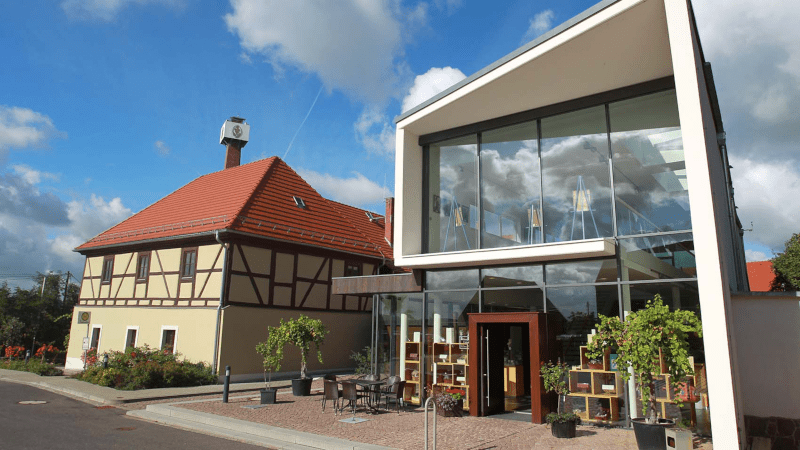
On May 9 (the 70th anniversary of the cooperative), the WeinErlebnisWelt Meißen was opened after two years of construction. -
2018
The cooperative celebrates its 80th anniversary. At this time, it has 1,519 members.
Philosophy of Winzer Meissen: Quality, Sustainability, and Respect for Nature
The philosophy of the Meissen Winzer Cooperative is rooted in three main pillars: quality, sustainability, and a connection to nature. Quality here means careful work in the vineyard, selection of suitable sites, yield limitation, careful hand-harvesting, especially in steep slopes, and high standards in the cellar. Sustainability is reflected in respecting natural resources: preserving soils, maintaining dry stone walls and terraces, promoting biodiversity, and applying as natural techniques as possible. Respect for nature also includes landscape preservation: narrow slopes, steep parcels, traditional vineyard sites—all are maintained and cultivated, not abandoned.
Furthermore, WINZER MEISSEN emphasizes regionality: wines that express the Saxony region, the vineyards around Meissen, the climate, and soil. Innovation plays a role: modern cellar technology, quality assurance, marketing, and a range that accommodates both traditional types and newer grape varieties and wine trends.
The Saxony Growing Area and Its Particularities
Saxony as a wine region is unique: it is among the northernmost vineyards in Germany, has shorter growing seasons, and is more affected by climate influences like late frosts, changeable weather, and cool phases. Simultaneously, the slopes along rivers like the Elbe offer microclimatic advantages: sunlight, reflection, hillside positions, and sun-warmed dry stone walls.
At Winzer Meissen, the winemakers cultivate around 145 hectares, about one-third of Saxony's total vineyard area. The most prominent vineyard sites include Seußlitzer Schlossweinberg, Pillnitzer Königlicher Weinberg, and Radebeuler Goldene Wagen. These sites are representative of the terroir—steep, sunny, often terraced, with soils varying significantly depending on slope, sunlight, and bedrock.
The soils are a central element of their identity: mainly weathered granite or syenite soils, loess layers with strong coverage on high plains and flattened areas, and occasionally sandy soils. This diversity allows different grape varieties to develop differently depending on soil type—some flourish in mineral, stony soils with good drainage, others benefit from deeper loess soils that store warmth and nutrients.
The Vineyards of Winzer Meissen and Their Characters
Winzer Meissen manages numerous individual vineyards with unique characters. Three particularly prominent sites are Seußlitzer Heinrichsburg, Proschwitzer Katzensprung, and Radebeuler Goldener Wagen.
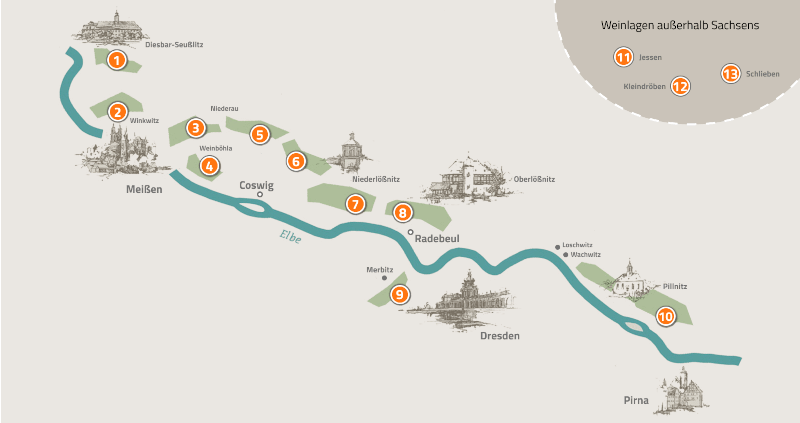
On Seußlitzer Heinrichsburg, strong loess deposits dominate the high plains, while granodiorite or granite weathered soils prevail on the steep slopes. These sites produce wines with good fruitiness and mineral backbone. The Proschwitzer Katzensprung is known for warm slopes and weathered granite soils mixed with loess; some parts are more frost-sensitive but attract lots of sunshine and heat. The Radebeuler Goldener Wagen is a flagship site, combining exposure, soil, and tradition—ideal for top wines where the vineyard's character should shine.
Other sites, including Pillnitzer Königlicher Weinberg, Meißner Ratsweinberg, and Meißner Kapitelberg, enrich the portfolio with their specific features regarding slope, soil mix, sun exposure, and microclimate. This creates a multifaceted picture: some wines are distinctly mineral, others fruity and aromatic, and some display power with elegant structure.
Below are some of the most important vineyards of the Winzer Cooperative Meissen:
1. Seußlitzer Heinrichsburg
-
Origin Municipality: Seußlitz
-
Vineyard Area: 88 ha
-
Grand Site: Seußlitzer Schlossweinberg
-
Soil Types: Strong loess deposits on the high plains, granodiorite weathered soils on the steep slopes
-
Name Origin: The name derives from the pavilion called Heinrichsburg above the Seußlitz castle.
2. Proschwitzer Katzensprung
-
Origin Municipality: Proschwitz
-
Vineyard Area: 19 ha
-
Grand Site: Spaargebirge
-
Soil Types: Weathered granitic rocks, mixed with loess in the upper parts
-
Name Origin: The name refers to the legend that Proschwitz's miller's cat fled from dogs over a protruding rock (Katzensprung).
3. Pillnitzer Royal Vineyard
-
Origin Municipality: Pillnitz
-
Vineyard Area: approx. 10 ha
-
Grand Site: Pillnitzer Königlicher Weinberg
-
Soil Types: Loess and loess clay covers
-
Name Origin: The name refers to the region's historical importance in viticulture and proximity to the royal Palace Pillnitz.
4. Radebeuler Golden Carriage
-
Origin Municipality: Radebeul
-
Vineyard Area: approx. 15 ha
-
Grand Site: Radebeuler Goldener Wagen
-
Soil Types: Granitic weathered soils with loess components
-
Name Origin: The name comes from the shape of the vineyard site resembling a cart, and the region's traditional winemaking significance.
These sites are characterized by their diverse soil types and microclimates, giving Winzer Meissen’s wines their characteristic diversity and quality. The combination of traditional terraced viticulture and modern methods enables producing wines with a unique terroir.
The Grape Varieties of Winzer Meissen
Winzer Meissen cultivates a broad variety of grapes, encompassing both white and red varieties, as well as newer breeds and specialty types. White grapes include classics like Riesling, Weissburgunder, Müller-Thurgau, Silvaner; specialties such as Traminer, Goldriesling, Kerner, and Morio Muskat; new cultivars like Souvignier Gris, Sauvignon Blanc, Solaris, or Cabernet Blanc. Red varieties include Spätburgunder, Dornfelder, Portugieser, Regent, and others.
Each grape variety has its typical requirements and expression in wine. Riesling, for example, is often cultivated on steep slopes for maximum ripeness and aromatics. Traminer plays a significant role in aromatic wines, especially on warm loess sites and protected locations. Weissburgunder thrives on warmer southern slopes and soils that store heat well. Red varieties are cultivated with care—often in locations that offer sufficient sun and soils that allow for enough warmth and ripeness, with red wine making up a smaller part of the portfolio.
Wine Production and Maturation at Winzer Meissen
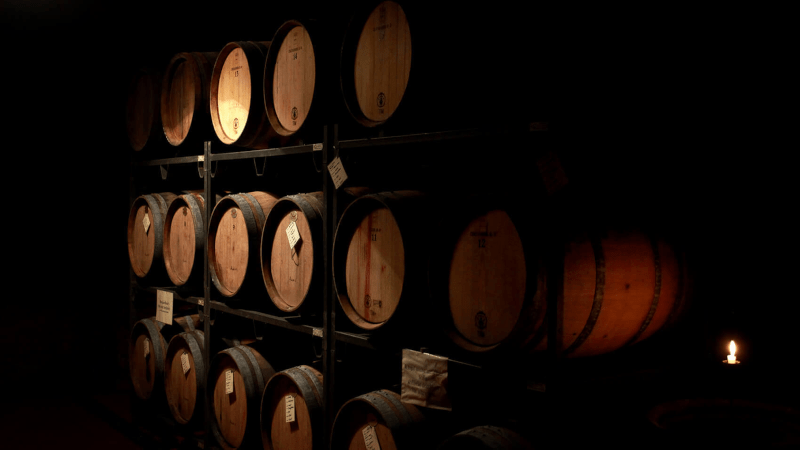
Wine maturation focuses on freshness, typicity, and a connection with nature. The cooperative produces country wines, single-varietal quality wines, and Prädikatswein (including Kabinett, Spätlesen, Auslesen, Beerenauslesen, and ice wines). There are also sekt (sparkling wine), perl wines, liqueurs, and spirits.
Awards and Recognitions
WINZER MEISSEN can boast numerous awards and accolades. In competitions like the AWC Vienna Award, the "Benno von Meißen" line received the gold prize for sekt multiple times, e.g., for sekt from Traminer or Morio Muskat, dry and off-dry, and Scheurebe brut. Silver awards were given for the quality wine Morio Muskat feinherb 2023, Silvaner quality wine feinherb 2023, Riesling Kapitelberg quality wine dry 2023, and Grauer Burgunder quality wine dry 2023.
At the DLG Federal Wine Prämierung 2024, several gold medals were awarded: e.g., for the 2023 Bacchus from the Saxony region, quality wine dry, Blanc de Noirs quality wine dry, and Prädikatswein like Kabinett and Spätlesen from Traminer grapes. Silver and bronze awards also regularly complement the portfolio, both for sekt and wines of various varieties.
Particularly notable is that Winzer Meissen received four stars for overall performance at the AWC Vienna Award 2024 — a recognition not only for individual wines but for the entire cooperative's work.
These recognitions are highly significant: they confirm high standards, enhance the regional image, increase visibility to customers, and allow wines from Saxony to be recognized in regional and international competitions.
Award-Winning Wines of Winzer Meissen
The brand “Benno von Meißen” appears on several wines, especially sekt and sparkling wines (“Benno von Meißen Traminer dry,” “Benno von Meißen Traminer brut,” “Benno von Meißen Morio Muskat dry,” etc.). These sekt are repeatedly praised in competitions and are considered flagship products of the cooperative.
An example from the online shop: the 2023 Scheurebe Proschwitzer Katzensprung Kabinett trocken received silver at the DLG (2025) and also silver at the AWC Vienna, with a nomination at the International Wine Challenge. Another example: the 2023 Kernling Radebeuler Johannisberg Feinfruchtig was awarded quality wine, also with DLG silver and AWC Vienna gold.
These wines, with their names or brand marks, often feature exceptional ripeness from very good sites, pronounced aromatics, and a balanced interplay of varietal character, sweetness or residual sugar, and lively acidity.
The People Behind Winzer Meissen
The Winzer Cooperative Meissen is led by Lutz Krüger as managing director. The cellar master responsible for winemaking, quality, and varietal care is Natalie Weich. Other authorized board members include Jürgen Zuschke among others. These individuals represent the team shaping both strategic orientation and daily operations.
Summary
The Winzer Cooperative Meissen is not just one among many wine producers – it unites tradition and modernity, is deeply rooted in Saxon territory, cultivates diversity, and strives for quality. Its location in Saxony, the terroir mix of granitic and loess soils, the maintenance of steep terraces, the broad range of grape varieties, its own brands, and the regular awards make it one of the shining examples of German viticulture.
What impresses most is its ability to uphold high standards despite climatic challenges, demanding sites, and strong competition—producing wines that are not only to be drunk but experienced.
Summary of Numbers and Facts of the Vineyard
-
Founded in 1938, the Winzer Cooperative Meissen.
-
Today, it has about 800 members.
-
The leading figures are Managing Director Lutz Krüger and cellar master Natalie Weich.
-
It manages around 120 hectares of vineyard area itself; in Saxony, total cultivation is about 494 hectares.
-
Average yield approximately 40 hectoliters per hectare.
-
Soils: predominantly weathered granite and loess, occasionally sandy soils.
-
Cultivated are numerous varieties, including white wines like Riesling, Weissburgunder, Goldriesling, Morio Muskat, and red wines like Spätburgunder, Dornfelder, Portugieser, Regent, among others.
-
The range extends from country wine to quality wine and Prädikatswein, sekt, sparkling wines, liqueurs, and spirits.
More information about Winzergenossenschaft Meissen
 https://www.winzer-meissen.de/
 https://www.facebook.com/winzermeissen
  +49 (0) 3521/ 780 970
  +49 (0) 3521/ 780 9728
 | Address | |
|---|---|
| Company Name: | Sächsische Winzergenossenschaft Meissen eG |
| Street: | Bennoweg 9 |
| City: | 01662 Meissen |
| Country: | Germany |
| Region: | Saxony |
| Continent: | Europe |
| Company | |
| Year of Incorporation: | 1938 |
| Managing Director: | Dietrich Weise, Lutz Krüger, Jürgen Zuschke |
| Wine | |
| Cellarmaster: | Natalie Weich |