• ♥ 23.985 wines and counting, just for you! ♥
  • Personal advice!
  • Secure packaging!
  • Reliable Shipping!

Sherry (89)

Sherry, the popular dessert wine from Andalusia, is as diverse as the culture of the country itself. Whether dry or off-dry, whether reductive or oxidative - there is the perfect Sherry for every taste.

More Information about Sherry
No results were found for the filter!
Sale
Rarity
Sommelier tip
Sale
Rarity
Sommelier tip
Fortified Wine Fortified Wine
dry dry
Spain Spain
Andalusia (ES) Andalusia
£ 11.88 * £ 10.10*
0.75 l (£ 13.46 * / 1 l)

Ready to ship today, delivery time appr. 6-8 workdays

Not Available
Save 5%, buy 12!
9999
NV
Not Available
Save 5%, buy 12!
4.50
(1)
Fortified Wine Fortified Wine
sweet sweet
Spain Spain
Andalusia (ES) Andalusia
£ 14.68*
0.75 l (£ 19.57 * / 1 l)

delivery time approx 6-9 workdays

Not Available
9999
NV
Not Available
Fortified Wine Fortified Wine
sweet sweet
Spain Spain
Andalusia (ES) Andalusia

£ 30.28*
0.5 l (£ 60.56 * / 1 l)

Delivery time approx 6-8 workdays

15% discount - Last bottles!
Save here now!
🌿 10% Spring Sale 🌿 Springtime prices
Browse now!
Must-Have Wines
These wines you should enjoy!
Sample packages
Now try variety & save!
1
2 3 4
1 - 25 / 89

Sherry: The King of Spanish Wines

Sherry is a wine full of tradition, elegance, and complexity. It delights connoisseurs and the curious alike, offering a taste experience that is unmatched. But what exactly is Sherry, and what makes it so special? In this comprehensive guide, we will take you on a journey through the world of Sherry. From its origins and history to its production, consumption recommendations, and amazing fun facts. Dive into the fascinating world of Sherry. Discover why this wine is a must for any wine lover.

What is Sherry?

Sherry is a fortified wine produced in the Andalusia region of southern Spain. It is characterized by its unique production method and a wide range of flavors. These range from dry and nutty to sweet and fruity. By adding brandy during the production process, Sherry achieves its characteristic alcohol content, which usually ranges from 15% to 22%.

The Variety of Sherry Types

Sherry is an incredibly versatile wine available in various styles. The most famous types include:

Fino: A light, dry Sherry with a delicate, slightly nutty flavor. It matures under a layer of flor yeast, which gives it its characteristic lightness.

Manzanilla: Similar to Fino, but exclusively produced in the coastal town of Sanlúcar de Barrameda. It has a light, salty note, making it particularly fresh.

Amontillado: A Sherry that first matures like a Fino under flor yeast and then undergoes oxidative aging. This results in a nutty, complex aroma.

Oloroso: A dark, rich, and full-bodied Sherry that matures exclusively oxidatively. It is characterized by strong aromas of nuts, dried fruits, and spices.

Palo Cortado: A rare type of Sherry that combines the elegance of an Amontillado with the depth of an Oloroso. It offers an incomparable flavor profile.

Pedro Ximénez (PX): A sweet Sherry made from dried Pedro Ximénez grapes. It is known for its intense sweetness and aromas of raisins and chocolate.

Cream Sherry: A blend of Oloroso and sweet Sherry varieties like PX, providing a luscious, creamy flavor.

Each of these varieties has its own charm and can be enjoyed for different occasions and tastes.

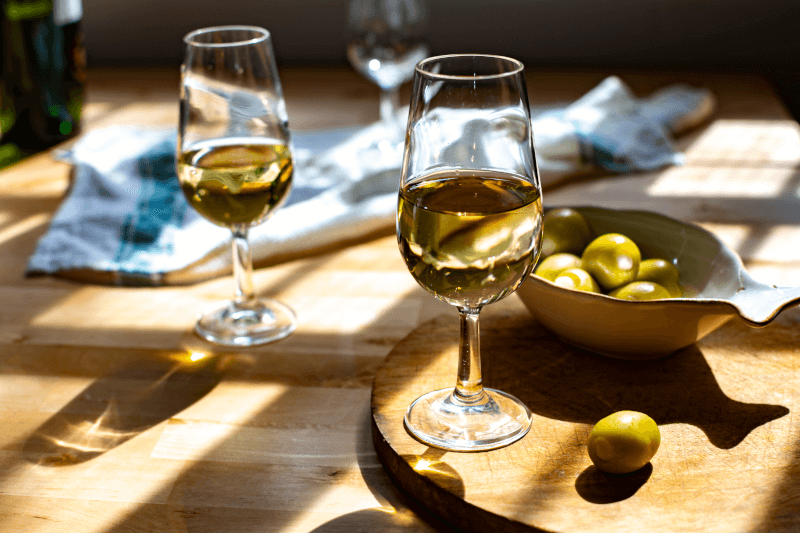
Sherry tasting with two glasses

Special Features That Make Sherry Unique

Sherry differs from other wines in many ways. Here are some of the unique features that make Sherry special:

1. The Solera System: Sherry is produced through a complex aging system called Solera. This involves blending wines of different vintages together. This ensures consistent quality and a uniform taste over the years.

2. Flor Yeast: A special type of yeast that forms on the surface of the wine. It is crucial for the character of Fino and Manzanilla. It protects the wine from oxidation and gives it its fresh, floral aromas.

3. Oxidative Aging: For some Sherry varieties, like Oloroso, aging occurs in barrels without protection from flor yeast. This leads to intense oxidation, giving the Sherry its deep, complex aromas.

4. Diversity of Soils: The region around Jerez offers various soil types, such as the famous Albariza chalk soil, which imparts unique character to the grapes.

The Origins of Sherry: A Gift from Andalusia

The roots of Sherry run deep in the Spanish region of Andalusia, particularly in the so-called “Sherry Triangle.” This encompasses the cities of Jerez de la Frontera, Sanlúcar de Barrameda, and El Puerto de Santa María. The area is renowned for its chalky soils and ideal climate that allows for the production of these wines.

The Magical Region of Jerez

Jerez de la Frontera is the heart of Sherry production. The region is known for its vast vineyards and historic bodegas where Sherry has been made for centuries. The geographical location near the Atlantic creates a special microclimate. This is what gives the wines their typical freshness and complexity.

Black barrels in the market square of Jerez

The Role of Sanlúcar de Barrameda and El Puerto de Santa María

Sanlúcar de Barrameda, a charming coastal town, is the birthplace of Manzanilla Sherry. The influence of the maritime climate gives this Sherry a distinctive salty note. El Puerto de Santa María is also part of the Sherry Triangle. It contributes to the diversity of Sherries produced in this region.

The Fascinating History of Sherry

The history of Sherry dates back a long way and is rich in cultural influences and traditions. Here is an overview of the key milestones in the history of this noble wine:

The Origins: Phoenicians and Romans

Winemaking in the region around Jerez goes back to the Phoenicians, who settled in the area around 1100 BC. They brought the vine to the region and laid the foundation for later wine production. The Romans adopted this tradition and expanded it, leading to the spread of viticulture throughout Spain.

The Moors and the Influence of Al-Andalus

With the arrival of the Moors in the 8th century, the region experienced a cultural blossoming. Although the Koran prohibits the consumption of alcohol, the Moors encouraged the cultivation of grapes for producing grape juice and medicinal tinctures. The techniques developed during this time laid the groundwork for later Sherry production.

The Christianization and the Rise of Sherry

After the reconquest by Christians in the 13th century, viticulture regained significance. In 1264, King Alfonso X reconquered the region and promoted the export of wine to England. English merchants played a crucial role in spreading Sherry throughout Europe, significantly contributing to its popularity.

The Golden Age of Sherry

In the 16th and 17th centuries, Sherry reached its peak popularity. The English nobility and royal court were fascinated by the Spanish wine, and it became a sought-after export commodity. Many of the Sherry brands still known today emerged during this time.

The Modern Era and the Sherry Boom

In the 19th and 20th centuries, Sherry experienced another flourishing period. The introduction of modern production methods and the export to the whole world helped solidify its reputation. Today, Sherry is an internationally valued wine, cherished by both connoisseurs and new generations of wine lovers.

The Production of Sherry: A Complex Process

The production of Sherry is a fascinating process that combines traditional and innovative techniques. The combination of nature and human skill creates a wine that is unique and inimitable. Let’s take a closer look at the individual steps of this process.

The Grape Harvest: The Beginning of Sherry

The grapes for Sherry are primarily derived from three grape varieties: Palomino, Pedro Ximénez, and Moscatel. The Palomino grape is the most important variety for dry Sherries like Fino, Manzanilla, Amontillado, and Oloroso. Pedro Ximénez and Moscatel, on the other hand, are used for sweet Sherries.

The grape harvest usually takes place from the end of August to early September. It is crucial to wait for the optimal ripeness of the grapes to ensure the best possible quality. After harvesting, the grapes are quickly brought to the wine cellars to preserve freshness.

The Fermentation: The First Step in Transformation

After harvesting, the grapes are pressed, and the juice is transferred to stainless steel tanks or wooden barrels for fermentation. Here, alcoholic fermentation begins, during which the natural yeasts convert the sugar into alcohol. This process usually lasts several weeks and results in a young wine with an alcohol content of about 11% to 12%.

The Fortification: The Decisive Difference

A crucial step in Sherry production is the fortification of the wine by adding brandy. Depending on the desired style of Sherry, the alcohol content is increased to around 15% to 18%. This process distinguishes Sherry from many other wines and allows the development of its unique flavors.

Fino and Manzanilla: These Sherries are fortified to about 15% alcohol content. They are stored under a layer of flor yeast. The flor yeast protects the wine from oxidation and gives it its characteristic fresh aromas.

Oloroso: For Oloroso Sherries, the alcohol content is increased to about 17% to 18%. They mature without flor yeast and undergo oxidative aging, which imparts their deep and complex aromas.

Aging in the Solera System: Art and Science

The Solera system is the heart of Sherry production. It is a unique aging process in which wines of different ages are stored in a tiered system of barrels. The youngest wine is in the upper rows, while the oldest is stored in the lower rows.

Each year, a portion of the matured wine is drawn from the lower rows and replaced with younger wine from the upper rows. This system ensures continuous blending of the wines and guarantees consistent quality over the years.

Sherry tasting on the roofs of Jerez

The Final Storage and Bottling

After aging in the Solera system, Sherry is bottled for further storage. Some Sherries, particularly the higher quality ones, may continue to age in bottles before sale, further refining their aromas.

Ingredients of Sherry: A Look into the Glass

The ingredients of Sherry are crucial to its unique aroma and flavor. Let’s take a closer look at the main components that make up a Sherry.

Alcohol

The alcohol content of Sherry typically ranges from 15% to 22%. It gives the wine its robust structure and plays a vital role in flavor development during aging.

Acids

The acidity in Sherry comes from the natural fruit acids of the grapes. It contributes to the freshness and balance of the wine and adds to the flavor diversity. The type and amount of acid vary according to the style of Sherry.

Sugar

The sugar content in Sherry varies significantly depending on the variety. Dry Sherries like Fino and Manzanilla contain almost no residual sugar. Sweet varieties like Pedro Ximénez, however, are rich in natural sugar sourced from the dried grapes.

Phenols and Aromas

Phenols are chemical compounds that are primarily responsible for the aroma and flavor of Sherry. They are formed during fermentation and aging and influence the diversity of aromas, ranging from fruity and floral to nutty and spicy.

Minerals and Nutrients

The soils of the Jerez region are rich in minerals, which are reflected in the wine. These minerals contribute to the complexity and depth of Sherry and give it its unique character.

Consumption Recommendations: The Perfect Enjoyment of Sherry

Sherry is an extremely versatile wine that is excellently suited for various occasions and pairings. Here are some consumption recommendations to make the most of your Sherry experience.

Serving Temperature

Fino and Manzanilla: These Sherries should be well chille at around 7-9 °C to fully showcase their freshness and fine aromas.

Amontillado and Palo Cortado: A temperature of about 12-14 °C is ideal for the complexity of these Sherries.

Oloroso, Pedro Ximénez, and Cream Sherry: These sweet Sherries can be served at room temperature or slightly chilled to bring out their intense aromas.

Glass Choice

Use a glass with a bulbous bowl and a slightly tapered opening to capture the aromas of Sherry optimally. A classic white wine glass or a glass specifically designed for Sherry is ideal for this.

Sherry as an Aperitif

Fino and Manzanilla are excellent as an aperitif to refresh the palate and stimulate the appetite. Serve them with olives, almonds, or tapas for an authentic Spanish experience.

Sherry with Food

Fino and Manzanilla: These dry Sherries pair well with seafood, grilled fish, and light appetizers like gazpacho.

Amontillado: The nutty aromas harmonize wonderfully with aged cheese, ham, and mushroom dishes.

Oloroso: This robust Sherry perfectly accompanies braised meats, game dishes, and hearty stews.

Pedro Ximénez: The intense sweetness of this Sherry is an ideal complement to desserts such as chocolate cake, ice cream, or blue cheese.

Sherry as a Digestif

After a rich meal, a glass of Oloroso or Pedro Ximénez is a wonderful conclusion. It indulges the senses and rounds off the tasting experience.

Fun Facts About Sherry: Interesting Tidbits at a Glance

• Sherry is not a name for a wine made from a specific grape. Many wines are named after the grapes used, but the name "Sherry" refers to the region where it is made and to the unique production process.

• Unique Solera Number: Each bodega has its own "Solera" number, indicating how many years the oldest wine has aged in the solera barrels. This is a sign of tradition and quality.

• The Oldest Bodega: González Byass, founded in 1835, is one of the oldest still-existing bodegas. It is known for its iconic Tío Pepe Fino Sherry.

• Differences in Aging: Some Sherries can age for over 30 years, maturing in old oak barrels that give the wine incomparable complexity.

• Climate Influence: The Levante (east wind) and Poniente (west wind) play an essential role in the aging process, influencing the formation of flor yeast.

• International Sherry Day: International Sherry Day is celebrated every year on May 26 to honor this special wine.

• Sherry in Literary Treasure: William Shakespeare mentioned Sherry in several of his plays, including "Henry IV," where he referred to Sherry as "Sack."

Interesting Facts About Sherry: What You May Not Have Known

Aging in Botas: Sherry is aged in traditional oak barrels called botas. They are filled to less than half their capacity to allow for the formation of flor yeast.

Prohibited Blending: In 1996, the EU prohibited the designation "Sherry" for wines outside the Jerez region to protect authenticity.

Calorie-Conscious: Dry Sherries like Fino and Manzanilla are low in calories and are well-suited for health-conscious wine lovers.

Diverse Soil Types: The Albariza soils of the region are especially good at retaining water, benefiting the grapes during the dry summer months.

Use in Cooking: Sherry is often used in Spanish cuisine, enhancing sauces and marinades and adding depth and flavor to dishes.

International Influence: Although Sherry originates from Spain, it has followers worldwide, especially in Great Britain, where it has been cherished for centuries.

Sherry Tourism: The region around Jerez attracts thousands of tourists annually, who visit the bodegas and discover the diversity of Sherries on-site.

Diversity of Flavors: Sherry offers a spectrum of over 300 flavors, ranging from citrus and green apple to hazelnut and roasted coffee.

UP